
Is it Time? Knowing When to Make the Leap From LLC to S Corp
You started your business, filed the paperwork, and became an official LLC owner. It felt like a big deal: because it was. But now that your business is growing and the profits are rolling in, you've probably heard whispers about the next step: electing S corporation status.
Maybe a fellow entrepreneur mentioned it at a networking event. Maybe your accountant casually dropped it into conversation. Or maybe you've just noticed that your self-employment tax bill keeps climbing, and you're wondering if there's a better way.
The truth is, switching from an LLC to an S Corp isn't right for everyone: but for many small business owners, it's a game-changer. The key is knowing when the timing is right for your specific situation.
Let's break it down.
What Does "Electing S Corp Status" Actually Mean?
First, a quick clarification. When we talk about "switching" from an LLC to an S Corp, we're not necessarily changing your legal business structure. Instead, you're making a tax election with the IRS by filing Form 2553.
Your LLC remains an LLC in the eyes of your state. But for federal tax purposes, you're now taxed as an S corporation. This distinction matters because it opens the door to some serious tax planning for small business owners.
So why would you want to do this? One word: savings.

The Self-Employment Tax Problem (And How an S Corp Solves It)
As a single-member LLC, all of your net business income is subject to self-employment tax. That's the 15.3% combination of Social Security (12.4%) and Medicare (2.9%) taxes that hits your bottom line every single year.
Let's say your LLC nets $120,000 in profit. Under the default tax treatment, you'd owe roughly $18,360 in self-employment taxes alone: before we even get to income tax.
Here's where the S corporation election changes the game.
When you elect S Corp status, you become an employee of your own business. You pay yourself a reasonable salary, and only that salary is subject to payroll taxes (which are essentially the same as self-employment taxes, just split between you and your company).
After that, your S Corp’s net business profit still “passes through” to you as the owner. That pass-through profit gets reported to you (typically on a Schedule K-1) and is taxed on your personal return at your individual income tax rates—so it depends on your tax bracket.
That means two owners in the same S Corp can pay different amounts of income tax on the same business profit if their personal situations are different (married vs. single, other household income, deductions, etc.).
One more thing, because social media gets this wrong a lot: taking money out of the S Corp isn’t what makes it taxable. The profit is what’s taxable. In many cases, actual cash/equity distributions you take during the year can be tax-free (to the extent of your basis), because you’re generally being taxed on the profit whether you withdraw the cash or not.
The big benefit here is that pass-through profit generally avoids self-employment tax—but it is still subject to regular federal (and often state) income tax.
Example time:
Using that same $120,000 in net profit, let's say you pay yourself a reasonable salary of $60,000. Here's how the math shakes out:
- Payroll taxes on $60,000 salary: ~$9,180
- Self-employment tax on the remaining $60,000 of pass-through profit: $0
Total payroll/SE tax: $9,180
Quick reality check: an S Corp election is a serious legal and tax decision, not a one-size-fits-all “hack.” It can be great in the right situation, but it’s not the right move for every business owner (or every stage of business).
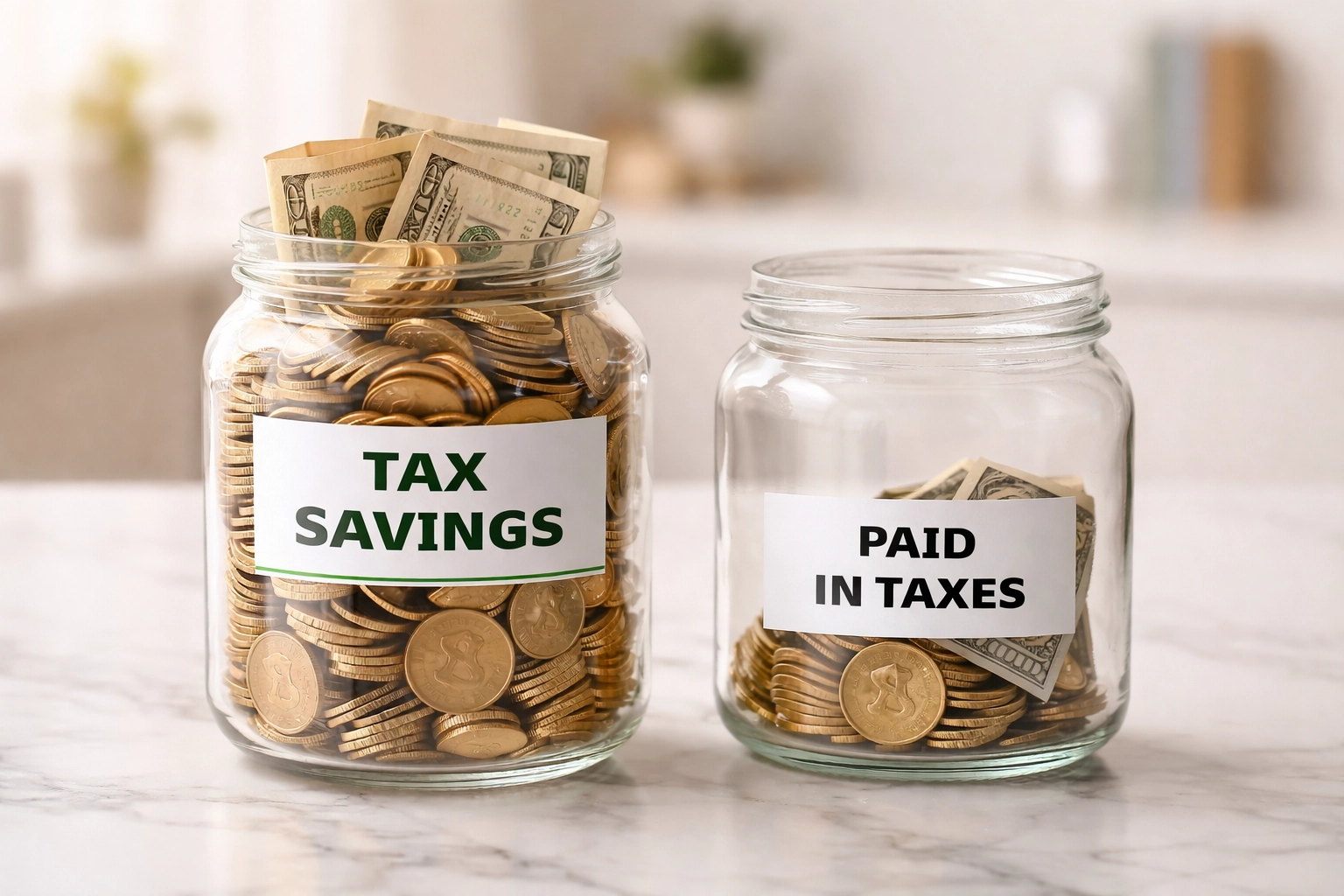
Compare that to the $18,360 you'd pay as a standard LLC. That's a potential savings of over $9,000 per year: money that stays in your pocket instead of going to Uncle Sam.
The "Break-Even" Point: When Does the Switch Make Sense?
Now, before you rush to file Form 2553, let's pump the brakes for a second. The S Corp election isn't a magic wand. It comes with additional costs and responsibilities that can eat into those savings if your business isn't generating enough profit.
So what's the magic number?
While every situation is different, most tax professionals agree that the break-even point for considering an S Corp election is somewhere between $40,000 and $60,000 in annual net profit.
Below that threshold, the administrative costs and compliance requirements of an S Corp might actually cost you more than you'd save.
Here's what you need to factor in:
- Payroll processing costs: You'll need to run payroll for yourself (and any employees), which typically means paying for payroll software or a payroll provider.
- Additional tax filings: S Corps require a separate business tax return (Form 1120-S), which usually means higher tax preparation fees.
- Reasonable compensation studies: The IRS requires that you pay yourself a "reasonable salary" based on industry standards. Skimp on this, and you're inviting an audit.
- State-specific taxes: Some states impose additional taxes or fees on S Corps that don't apply to LLCs.
The bottom line? If you're consistently netting $50,000+ per year and expect that to continue (or grow), the S Corp conversation is worth having.
The Added Responsibilities of S Corp Status
Let's be real: being taxed as an S Corp adds complexity to your business. Here's what you're signing up for:
1. Running Payroll (Yes, For Yourself)
As an S Corp owner-employee, you must pay yourself a regular salary through payroll. That means withholding income taxes, Social Security, and Medicare: just like any other employee.
You'll also need to file quarterly payroll tax returns (Form 941) and issue yourself a W-2 at year-end. If this sounds like a headache, outsourcing payroll can make it painless.
2. Maintaining Reasonable Compensation
The IRS pays close attention to S Corp owner salaries. Pay yourself too little, and you could face penalties, back taxes, and interest. The key is to set a salary that reflects what someone in your role and industry would reasonably earn.
This is where working with a tax professional becomes invaluable: they can help you document and defend your compensation if the IRS ever comes knocking.
3. Separate Tax Return
Your S Corp files its own tax return (Form 1120-S), which reports the business's income, deductions, and each shareholder's share of the profits. This return is due by March 15th each year, and late filing penalties can add up quickly.
4. Stricter Recordkeeping
S Corps require more formalized recordkeeping than a standard LLC. You'll want to keep clear documentation of shareholder distributions, meeting minutes (if applicable), and any transactions between you and the business.
Signs You're Ready to Make the Leap
Not sure if now is the right time? Here are some green lights that suggest you might be ready for the LLC vs S Corp conversation:
- Your net profit consistently exceeds $50,000 per year. One good year isn't enough: you want to see a pattern of profitability.
- You're comfortable with (or willing to outsource) payroll. If the idea of running payroll makes you break out in hives, that's okay. Just make sure you have a plan.
- You're already working with a tax professional. The S Corp election works best when it's part of a broader tax planning strategy: not a DIY experiment.
- You're reinvesting in your business. S Corps work especially well when you're keeping money in the business for growth rather than taking every dollar as personal income.
- You want to be proactive, not reactive. If you're tired of getting surprised by your tax bill every April, the S Corp election is one tool in your proactive planning toolbox.

Timing Matters: When to File
If you've decided to make the switch, timing is critical.
To elect S Corp status for the current tax year, you generally need to file Form 2553 within two months and 15 days of the start of your tax year. For calendar-year businesses, that means the deadline is typically March 15th.
Miss the deadline? You may still be able to request late election relief, but it's not guaranteed. Planning ahead is always the smarter move.
The Bottom Line
The decision to elect S Corp status isn't about chasing a tax hack: it's about making a strategic choice that aligns with where your business is right now and where it's headed.
If your LLC is generating consistent profits, you're comfortable with a bit more administrative responsibility, and you're ready to stop overpaying on self-employment taxes, the S Corp election could be your next smart move.
But here's the thing: every business is different. The "right" answer depends on your income, your goals, your state, and a dozen other factors.
That's where we come in.
At Heritage Advisory & Tax, we specialize in helping small business owners like you make informed, strategic decisions about entity structure, tax planning, and long-term growth. If you're wondering whether the S Corp election makes sense for your situation, let's talk.
Stay tuned for the next post in our S Corp Masterclass series: "The Salary Sweet Spot: Demystifying Reasonable Compensation."
Let’s find your way to tax and accounting peace of mind
Let us be part of your journey towards success.